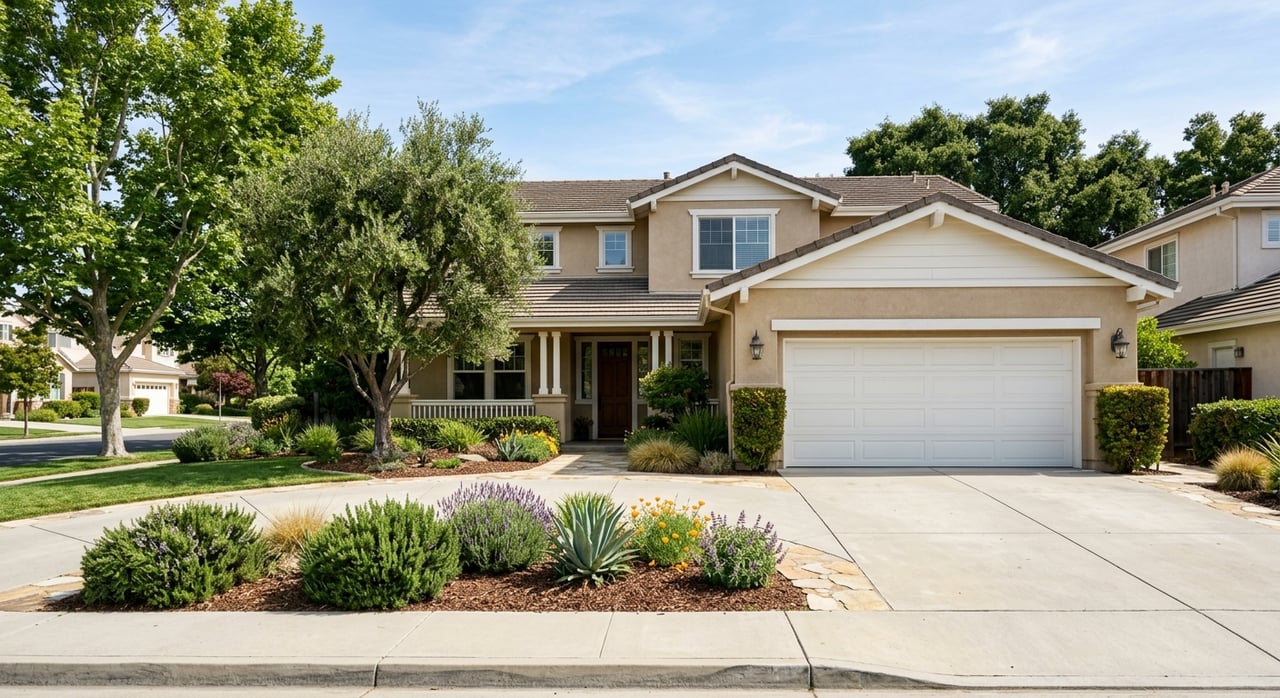
Buying In Tracy, CA For A Bay Area Commute
April 2, 2026
April 2, 2026
If East Bay home prices have you looking farther out, Tracy is probably already on your radar. You may be wondering whether the lower price point is worth the trade-off of a longer trip into Oakland, Hayward, or Berkeley. The short answer is that it can be, but only if your budget, work schedule, and commute tolerance line up. Let’s dive in.
For many Bay Area buyers, Tracy stands out because it can offer more house for the money than several East Bay cities. According to recent Redfin data, Tracy’s median sale price was $615,000 in February 2026, compared with $740,000 in Oakland, $870,000 in Hayward, and $1.288 million in Berkeley.
That price gap is not small. It works out to about $125,000 less than Oakland, $255,000 less than Hayward, and $673,000 less than Berkeley. If you are trying to balance monthly costs, space needs, and long-term ownership goals, that difference can open up options.
Tracy also has a housing profile that appeals to many buyers who want a suburban setting. The U.S. Census QuickFacts page for Tracy reports a population of 100,136, a 65.0% owner-occupied housing rate, a median household income of $121,119, and a median value of owner-occupied homes at $699,000.
One of the biggest mistakes buyers make is assuming Tracy has one price point across the board. In reality, pricing can shift a lot depending on location and housing type.
Redfin neighborhood data shows Downtown Tracy at $520,000, Eastlake at $690,000, Tracy Hills at $736,000, and Ellis at $871,000. That spread matters if you are trying to decide whether your main priority is affordability, newer construction, or a specific home style.
This also means your search should start with a clear list of priorities. If your goal is the lowest entry point, one part of Tracy may fit better. If you want a newer home and are willing to stretch on price, another area may make more sense.
The biggest trade-off in buying in Tracy for a Bay Area commute is not subtle. You are usually choosing lower home prices in exchange for a longer, more schedule-sensitive commute.
For drivers, the main corridor into the East Bay is I-205 to I-580. Caltrans describes I-580 as running west from the Alameda and San Joaquin County line through Livermore, Pleasanton, Castro Valley, Oakland, Berkeley, Albany, and Richmond, and a separate Caltrans project page places the I-580/International Parkway interchange in Tracy.
That route gives you a direct path toward major East Bay job centers, but it is also the corridor many commuters rely on. If you expect to drive every day, it is important to think beyond mileage and focus on the day-to-day reality of traffic, timing, and consistency.
The Census QuickFacts data for Tracy lists the mean travel time to work at 42.5 minutes. That figure helps provide context, but your actual door-to-door trip can vary based on where you work, when you leave, and whether you drive, take transit, or mix both.
If you plan to commute by car, I-205 and I-580 will likely be your main route. This can be practical for some buyers, especially if your work schedule is flexible or you are only commuting a few days a week.
There is also an express lane component to know about. 511 notes that I-580 Express Lanes operate in the Tri-Valley segment, with westbound lanes between Greenville Road in Livermore and I-680 and eastbound lanes between Hacienda Drive and Greenville Road. Solo drivers need FasTrak or FasTrak Flex.
That does not remove commute stress, but it is part of the route planning equation. If you are comparing Tracy to a closer East Bay city, be honest about what daily driving will feel like over time, not just what it looks like on a map.
If you do not want to drive the full way, there is a transit option, but it is not a direct rail commute from Tracy. San Joaquin RTD Route 150 connects Tracy Transit Station with Dublin BART Station on weekdays and weekends.
Current fares are $7 one-way or $158 monthly. From there, your trip into Oakland, Hayward, or Berkeley continues on BART, which means the commute is typically bus to BART rather than a single-seat ride.
This matters because transfer-based commutes require more planning. If your work start time is rigid, or you need the simplest possible routine, a multi-step commute may feel very different from living closer to a direct transit line.
There are also station costs to factor in if you drive to BART instead of using Route 150. The same RTD Route 150 page notes that Dublin/Pleasanton BART daily fee parking is $3.40 per day, with monthly reserved parking at $93.80.
In many cases, yes. Tracy tends to make the most sense when you value price and space enough to accept a longer commute, especially if you are not making that trip five days a week.
If you work a hybrid schedule, the savings on purchase price may outweigh the burden of commuting a few times per week. If you are fully in person in Oakland, Hayward, or Berkeley, the commute itself becomes one of the major costs of the decision, even if it does not show up the same way as a mortgage payment.
That is why this choice is rarely just about the list price. It is about how housing costs, time, transportation expenses, and day-to-day energy fit together in your real life.
Before moving forward, it helps to pressure-test the decision with a few simple questions:
These questions can quickly tell you whether Tracy is a smart financial stretch or a lifestyle mismatch. The right answer depends less on the city itself and more on how you plan to live and work.
If you decide Tracy is the right fit, you should still be prepared for competition. Redfin reports that Tracy remains a very competitive market, with homes receiving about 2 offers on average and selling in around 29 days.
That pace is not extreme by Bay Area standards, but it does mean good homes can move quickly. If you are comparing Tracy with East Bay options, it helps to get clear on your budget, commute plan, and must-haves before you start touring homes.
A focused strategy matters even more when you are balancing two competing goals: getting better value and keeping the commute manageable. The buyers who feel best about this move are usually the ones who go in with clear expectations.
Buying in Tracy for a Bay Area commute can make a lot of sense if you want more affordability than many East Bay markets offer and you can handle a longer, transfer-based, or traffic-dependent trip. It is often strongest for buyers with hybrid work, flexible schedules, or a clear priority on space and purchase price.
If your job requires a daily in-person commute into Oakland, Hayward, or Berkeley, the decision deserves extra scrutiny. Looking at the home price alone is not enough. You also need to weigh time, transit or driving costs, and how sustainable that routine will feel after the excitement of closing day wears off.
If you want help comparing Tracy with East Bay options through a local commuter’s lens, Jaspreet Johal can help you evaluate price, commute trade-offs, and the neighborhoods that best match your goals.
Stay up to date on the latest real estate trends.




Looking for a real estate agent who truly puts your needs first? Jaspreet delivers exceptional client care and real results. Reach out today and take the first step toward your real estate success.
39510 PASEO PADRE PKWY STE 120 FREMONT CA 94538